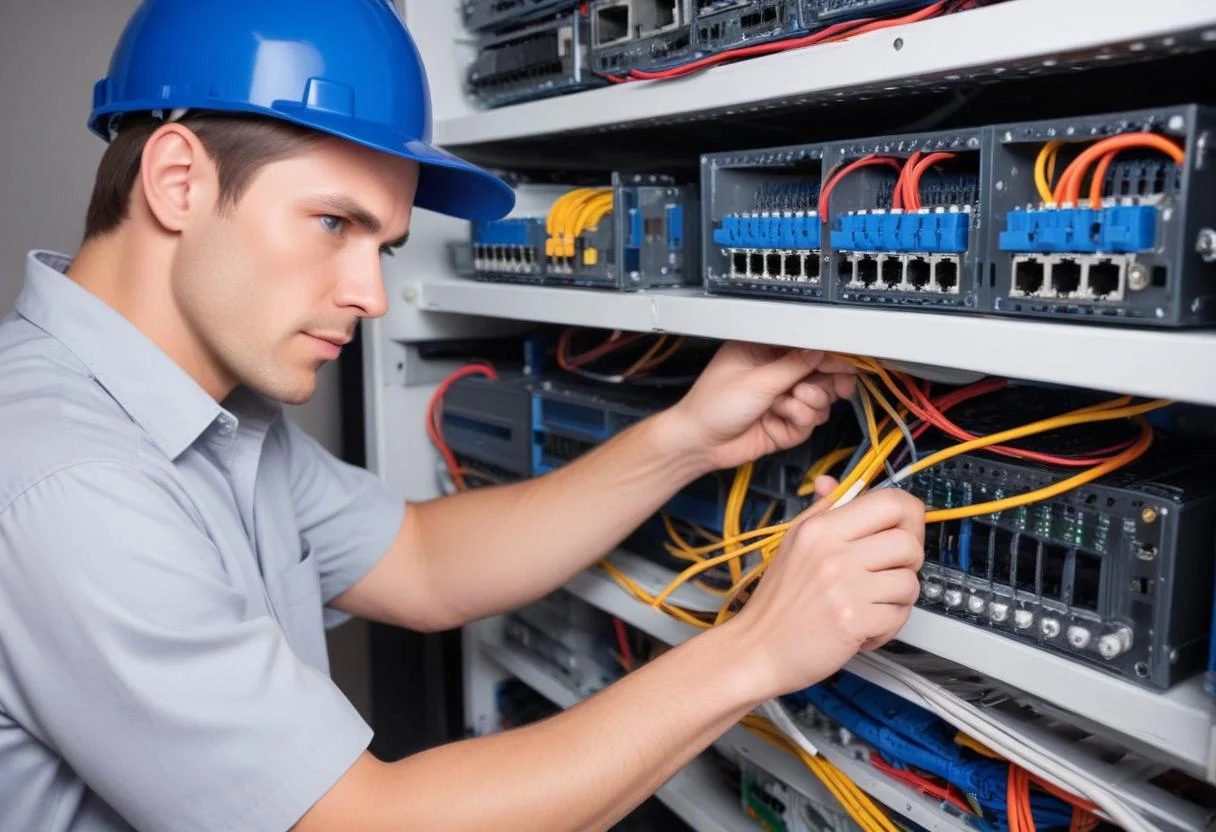
In today’s digital age, seamless network cabling installation is crucial for ensuring efficient data transmission and connectivity. Whether it’s a small office or a large enterprise, the reliability of a network hinges on the quality of its cabling installation. Understanding the nuances of network cabling can significantly enhance the performance and scalability of a network infrastructure. This article provides expert tips and strategies to help achieve a flawless network cabling installation.
Understanding the Basics of Network Cabling
Before diving into the installation process, it is essential to understand the fundamental components of network cabling. Network cables are the backbone of any network, connecting devices and enabling communication. The most common types of network cables include:
- Twisted Pair Cables: Commonly used in Ethernet networks. They come in shielded (STP) and unshielded (UTP) varieties.
- Coaxial Cables: Used for cable television and broadband internet connections.
- Fiber Optic Cables: Offer high-speed data transmission over long distances with minimal signal loss.
For more comprehensive insights on these cable types, explore advanced guides and tips.
Planning for a Successful Installation
Proper planning is the key to a successful network cabling installation. Here are some tips to ensure seamless execution:
Conduct a Thorough Site Survey
Before beginning the installation, conduct a detailed site survey to understand the layout and specific requirements of the space. This includes:
- Identifying existing network infrastructure and potential obstacles.
- Assessing the distance between devices to ensure the right cable lengths.
- Planning for future expansion and scalability.
Understanding these factors will help determine the most suitable cabling solutions. Learn about our tailored solutions for various environments.
Choose the Right Cabling Solution
Selecting the appropriate cabling solution is crucial. Consider factors such as:
- Data Transmission Speed: Ensure the chosen cables support the required data rate and bandwidth.
- Environmental Conditions: Select cables that can withstand environmental factors like temperature and humidity.
- Budget Constraints: Balance cost with performance to meet both financial and technical requirements.
To make informed decisions, discover expert strategies here.
Executing the Installation
Once the planning stage is complete, the installation process can begin. Follow these steps for a smooth execution:
Labeling and Organizing Cables
Effective cable management is essential for maintenance and troubleshooting. Consider the following practices:
- Label all cables clearly for easy identification and future reference.
- Use cable trays and conduits to keep cables organized and secure.
- Avoid tight bends and kinks to prevent damage and signal degradation.
For more tips on cable management, find out more about this approach.
Testing and Certification
After installation, it is critical to test and certify the network cabling to ensure optimal performance. This involves:
- Utilizing network testers to check for continuity, signal integrity, and proper termination.
- Certifying the installation to industry standards to guarantee reliability and performance.
- Documenting test results for future reference and compliance.
Testing and certification not only validate the installation but also enhance network reliability. Explore advanced guides and tips for testing procedures.
In conclusion, a seamless network cabling installation requires meticulous planning, careful execution, and thorough testing. By following these expert tips, businesses can ensure their network infrastructure is robust, reliable, and ready for future challenges. For those seeking further guidance and solutions, discover expert strategies here.