In today’s rapidly evolving financial landscape, the ability to efficiently manage and optimize data is crucial for financial institutions. The demand for real-time analytics, compliance with stringent regulations, and the need for secure data handling has driven organizations to seek innovative solutions. Snowflake, a cloud-native data platform, presents a transformative approach to financial data optimization Snowflake. This article explores how Snowflake enhances financial data optimization, offering scalable solutions tailored to the intricate demands of the financial sector.
Understanding Snowflake’s Role in Financial Services
Snowflake serves as a comprehensive platform that supports various data-related needs within financial services. Its ability to unify data across silos and facilitate seamless data sharing can significantly enhance decision-making processes. In particular, Snowflake’s architecture is designed to address the following:
- Scalability: Snowflake’s multi-cluster architecture allows financial institutions to scale their resources up or down as needed, ensuring cost-effectiveness and performance efficiency.
- Data Sharing: The platform’s Secure Data Sharing feature enables financial firms to share live data with partners and clients without compromising security.
- Compliance: Snowflake’s built-in cloud data compliance for finance teams ensures that institutions meet regulatory requirements seamlessly.
Integrating with Databricks for Enhanced Analytics
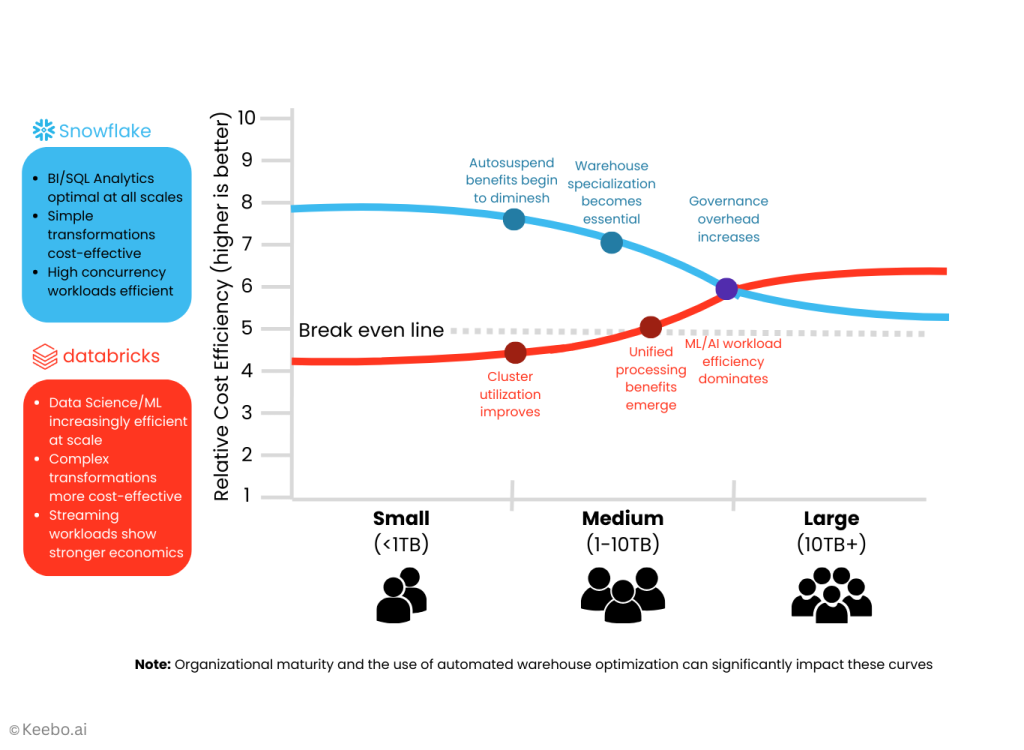
By integrating Snowflake with Databricks, financial institutions can unlock powerful analytics capabilities. This integration supports complex workloads and provides a robust Databricks for banking analytics solution, enabling deeper insights and improved strategic planning.
Cost-Efficiency and Financial Operations
Leveraging Snowflake’s features can significantly reduce operational costs. By adopting a cost-efficient data stack for financial services, institutions can streamline their data processes and improve their financial operations.
- Cost Reduction: Utilizing Snowflake’s elasticity allows firms to optimize their resource usage, thus reduce cloud data cost in banking.
- FinOps Optimization: Snowflake provides tools for Snowflake FinOps for banks, helping institutions manage their financial operations more efficiently.
- Investment Data Management: The platform also supports a robust FinOps platform for investment data, enhancing the management of investment portfolios.
Security and Compliance
Security is a paramount concern in financial services. Snowflake ensures that data is stored and shared securely, adhering to the highest industry standards. This is crucial for secure cloud analytics for financial firms, ensuring that sensitive financial data remains protected.
Audit and Observability
For financial institutions, maintaining a comprehensive audit trail is essential. Snowflake’s platform supports audit-ready observability for finance, providing detailed insights into data operations and compliance status.
Conclusion
Snowflake’s innovative approach to data management offers financial institutions the tools they need to thrive in a competitive market. By enhancing data optimization, ensuring compliance, and reducing costs, Snowflake empowers financial services to harness the full potential of their data. Moreover, with the integration of solutions like Databricks, organizations can further enhance their analytical capabilities and strategic planning. For institutions looking to optimize their data processes, Snowflake presents a compelling and robust solution.